


Gas Fingerprint with FTIR: Sample Identification and Analysis for Oil & Gas Industries

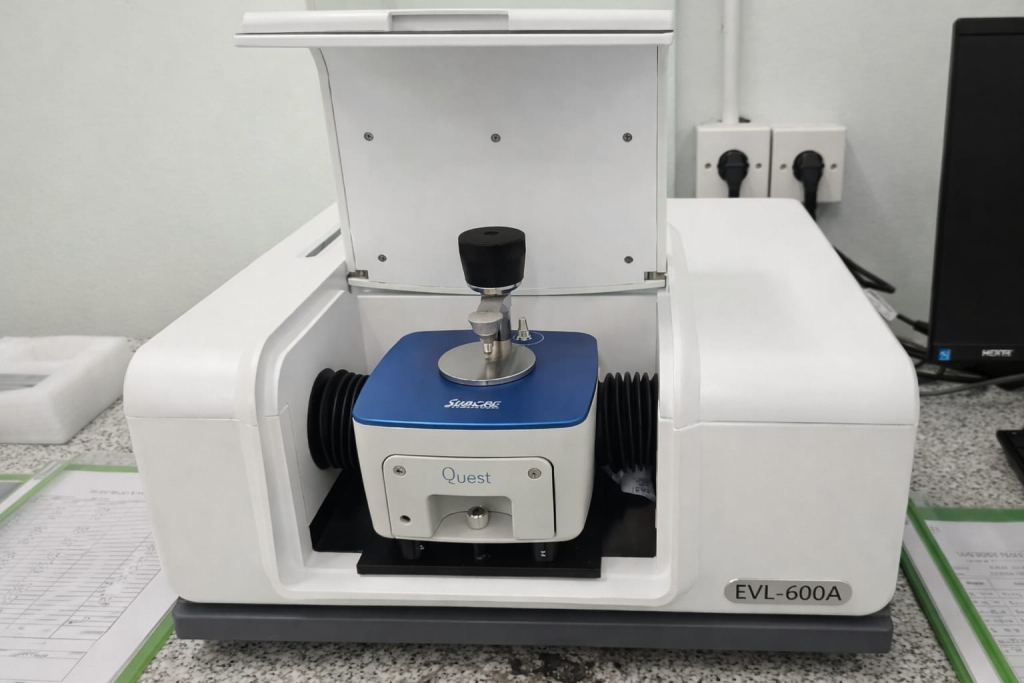
Fingerprint gas is an analytical approach that utilizes the characteristics of a sample spectrum to help process identification, comparison and material characterization. In lab testing, Fourier Transform Infrared Spectroscopy can be used to acquire spectrum patterns that represent the characteristics of chemical bonds in samples.
For Oil & Gas industries, that information can be used for screening, quality control, sample compare, investigation of material changes, or supports trouble shooting. FTIR can also be an complementary analysis technique against other methods such as Gas Chromatography (GC), especially when the purpose of testing is to get a chemical characteristic or fingerprint A material.
Gas Fingerprint quality with FTER
For industries, the use of FTIR for Fingerprint analysis Gives some benefit in the sample characterization process:
- Materials identification and characterization
Absorbination patterns on the FTIS spectrum can provide information about the characteristics of the specific groups and chemical structures in samples. - Rapid Screen
FTIR can be used as a method screening to get a relatively quick description of the sample characteristics before further analysis is done. - Sample Comparison
Spectrum samples can compare to reference spectrum or an comparison sample to see the similarities and characteristic differences. - Quality Control
Fingerprint can be used as one of the supporting data in a material consistency check or product. - Troubleshooting and Investigation
A change in spectrum patterns can help direct an investigation when there is a change in the characteristics of a material or a suspected contamination.
What are you talking about, Gas Fingerprint?
Term fingerprint The spectroscopy analysis refers to a spectrum pattern produced by a material.
When samples interact with infrared radiation, certain molecules absorb energy on certain wave numbers. The measurement result was then shown in the shape of a spectrum with characteristics peak or pattern absorbansion.
The pattern can be used as a characteristic information sample.
Simply put, the process can be described as:
Sample
Because each material can have different spectrum characteristics, it can be used to help process identification and characterization.
However, fingerprint Doesn't always mean that a spectrum automatically provides the absolute identity of a compound. The interpretation still needs to consider the type of samples, the quality of the spectrum, reference, testing conditions, and analysis purposes.
FTER role in Gas Fingerprint Analysis
FTIR (Fourier Transform Infrared Spectroscopy) works by measuring infrared radiation interaction with molecules in samples.
In context Fingerprint analysis, the information obtained mainly comes from patterns of absorbansion in different wave numbers.
The spectrum can then be used for:
- see the characteristics of the function group;
- compare samples to reference;
- identifying chemical characteristics;
- Do screening material;
- support investigation into the differences between samples.
The FTER advantage is its ability to generate spectral information so it doesn't just depend on one peak.
In laboratory practice, interpretation should be done by looking at the entire spectrum pattern, not just one peak.
Valuable characteristics with FTIR
Depending on the type of samples and instrument configuration, the FTIR can be used to evaluate chemical characteristics associated with various functions.
| Evaluate | Purpose |
|---|---|
| Fingerprint Spectrum | View the characteristic pattern of the sample |
| Functional Group Identification | Identifying specific function groups indicators |
| Sample Comparison | Compare samples to reference |
| Contaminant Screening | Support screenings against unexpected changes or components |
| Quality Control | Checking material characteristics consistency |
| Troubleshooting | Support investigation changes the characteristic of the sample |
In the Oil & Gas industry, that approach can be applied to various types of materials and samples as to the purpose of testing.
Gas Fingerprint vs Gas Composition Analysis
One of the important things to understand is that Gas Fingerprint and Gas Composition Analysis Not a term that always means the same thing.
Gas Composition Analysis generally aims to know the composition and concentration of the components of the gas, whereas Fingerprint analysis more emphasis on spectral characteristic patterns or chemical samples.
Because the purpose of analysis is different, the method used can also be different.
| Need | FTER | Chromatography gas |
|---|---|---|
| Chemical fingerprint | ✔️ | ✔️ |
| Sample Comparison | ✔️ | ✔️ |
| Functional group screaming | ✔️ | — |
| component separation | — | ✔️ |
| Individual component quantity | Depends on the application | ✔️ |
| Gas composition analysis | Depending on configuration | ✔️ |
| Rapid screaming | ✔️ | ✔️ |
Thus, the FTIR and GC are more appropriate to be seen as complemented techniques.
If the need for analysis is to determine the composition of the components of the gas individually, the GC can become a more appropriate option. Meanwhile, FTIR can provide a useful spectral information for screening, characterization, and sample comparison.
When is FTER used in test labs?
The FTIR selection depends on the purpose of testing, not any available tool.
FTIR can be considered when analysis needs include:
1. Sample Screen
In case it takes an initial examination of the chemical characteristics of samples before a more specific test is performed.
2. Sample-to- Sample Comparison
Spectrum of two or more samples can compare to seeing a pattern of similarities or differences.
3. Quality Control
Fingerprint can be one of the support parameters to monitor material consistency.
Four. Investigation
If the characteristics of a material change, the spectrum can be compared to a normal sample or reference As part of the investigation process.
Workflow Test Gas Fingerprint with FTER
In the lab, testing doesn't stop when instruments generate spectrum.
Workflow analysis can cover:
1. Sample Receipt
Sample received and verified based on information as well as sample conditions.
↓
2. Sample Preparation
Samples are prepared according to the characteristics and need for testing methods.
↓
3. FTER Measurement
Samples were analyzed using FTIR to acquire infrared spectrum.
↓
Four. Processing Spectrum
Data spectrum checked and processed according to analysis needs.
↓
5. Reference / Library Comparison
Spectrum can be compared to reference Or a relevant library.
↓
Six. Interpretation
Analysts evaluate spectrum patterns, peak, and characteristics that are relevant.
↓
Seven. Report
Test results are presented in the lab report as per the purpose of the test.
Sampling / Testing Enhanced Spectrum Interpretation Report helps ensure that FTIR data not only become a graph, but can be used as analytical information.
Fingerprint Gas Applications in Oil & Gas Industries
In Oil & Gas Industries, needs Fingerprint analysis It can emerge in any number of testing activities and lab investigations.
Crude Oil and Petroleum Products
FTIR can be used to help characterization and comparison of petroleum-based materials to the purpose of analysis. The spectrum pattern can be a support data within quality control, characterization, or investigation of sample differences.
Fuel Analysis
On fuel, fingerprint can be used as supporting information to compare sample characteristics, doing screening, as well as helping evaluate product characteristics changes.
Lubricant and Used Oil
At Lubricant or used oil, change of spectrum patterns can be an indication of a change in chemical characteristics. Data FTIR can be used as part of an oil condition monitoring approach and investigation of lubrication conditions.
Refrigerant Identification and Checking
The FTIR can also be used for check and character refrigerant, especially when required identification of chemical characteristics or comparison of refrigerant samples.
These tests can help in:
- Do screening and identification of refrigerant characteristics;
- compare samples to materials reference;
- evaluating indications of difference or contamination;
- support check quality control;
- assisting the investigation of the refrigerant which does not fit the specifications or characteristics expected.
In practice, the refrigerant analysis needs to be adjusted to the kind of refrigerant, sample forms, FTIR configuration, preparation methods, and testing purposes. Results fingerprint then can be compared to reference spectrum It's relevant to support interpretation.
Chemical and Access Samples
FTIR can be used to help screening and the characterization of certain chemical materials used in industrial processes.
Investigation and Troubleshooting
When there's a difference between a normal sample and a changing sample, a spectrum comparison can be one approach to direct an investigation and determine the continued need for testing.
FTER Results Interpretation: Not Just Seeing Peak
One of the common mistakes in understanding the FTIR is to assume that one peak It directly shows the identity of a compound.
In laboratory practice, interpretation is better done by looking:
- position peak;
- intensity;
- shape peak;
- the whole spectrum pattern;
- fingerprint;
- Align with reference;
- The characteristic matrix samples.
Results then interpreted according to the purpose of testing.
For analysis that require identification or qualification of components more specifically, the FTIR can be combined or continued with other analytical methods.
Why are the tests at the important lab?
Interpretation Quality Fingerprint Gas Depending on the quality of data obtained.
Some factors that can affect the outcome of others:
- sample conditions;
- preparation method;
- instrument configuration;
- measurement conditions;
- background;
- spectrum quality;
- reference / library used;
- Analyst competence.
Therefore, FTIR results should not only be seen as a spectrum image, but as analytical data that needs to be interpreted based on the context of samples and the purpose of testing.
Gas Fingerprint with FTIR for Industrial Need
For industrial needs, an analysis method selection should be carried out based on the technical questions that would like to be answered.
If the question is:
"Are the chemical characteristics of this sample equal or different from reference?"
FTER fingerprint Could be a relevant approach.
But when the question is:
"What's the concentration of each component in a mixture of gas?"
Then methods like Chromatography Gas can be more appropriate, depending on matrix and analysis specs.
Understanding that purpose difference helps companies avoid improper testing and acquire more relevant data for decision-making.
Power Hidea PT Test Service
As an Oil & Gas test lab, PT Hidea Core supports laboratory analysis needs for characterization and evaluation of various industrial samples.
FTER Analysis need, Fingerprint Analysis, Gas Composition Analysis, Crude Oil Analysis, Fuel Oil Analysis, Lube Oil Analysis, and other tests can be consulted based on type of samples and purpose analysis.
The method selection can be adjusted to the technical questions that want to be answered, so the testing does not only produce data, but provides relevant information for quality control needs, trouble shooting, character, and industrial decision- making.
Testing Information
For Gas Fingerprint needs, FTER Analysis, or testing Oil & Gas labs, please contact:
Custom Service PT Hidea Core
📞 +62 877-6494-5736
📧 labservices@hidea.id
Power Hidea team ready to help consult on sample types, parameter needs, analysis methods, and lab testing needs.
