


FTIR Analysis for Industry: Identification, Fingerprint, Interpretation and Oil & Gas Application

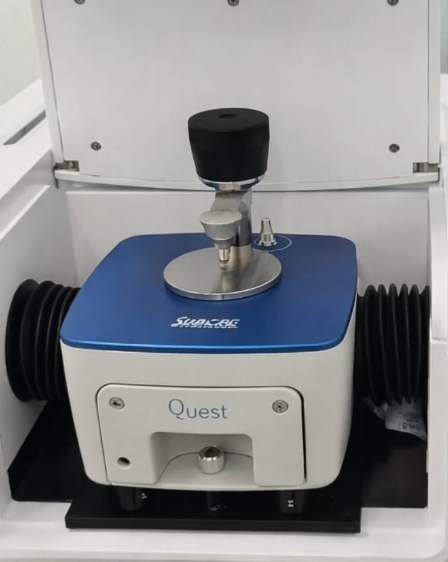
FTER Analysis (Fourier Transform Infrared Spectroscopy) It's a lab testing service used to help identify the chemical characteristics of a material through an infrared spectrum pattern. In industrial need, FTIR can be used to identify function groups, chemical fingerprint, sample ratio, screening material, thus supporting changes or contamination investigations.
For Oil & Gas industries, petrochemistry, energy, and manufacturing, FTIR is one of the method analytics that can be used when it needs information of chemical characteristics quickly and comprehensive. The results of the spectrum can be compared to reference spectrum or an comparison sample to help determine the similarities and characteristics of material.
However, FTIR is not always a method of answering the entire need for analysis. The method selection needs to be adjusted to the type of samples, the purpose of testing and information to be obtained.
FTIR Analysis Expert for Industrial Requires
For the industrial sector, the use of FTI analysis services provides some benefit in the process of characterization and sample evaluation:
- Chemical Fingerprint FTIR spectrum provides a characteristic pattern that can be used as fingerprint A material compared to a reference sample.
- Position and characteristics Task Force identifier peak The spectrum can provide information about the function groups that are in the samples.
- Sample Comparison Spectrum from different samples can be compared to seeing the similarities or changing chemical characteristics.
- Rapid Screen FTIR can be used as a method screening Early on before testing with other specific analytical methods.
- Supporting Troubleshooting Change of spectrum patterns may be a supporting information in the investigation of the changing characteristics of material, products, or sample processes.
- Applications on Material Various With suitable configuration and preparations, FTIR can be used for various types of samples, including solid, liquid, and gas applications.
What was analyzed in the FTIR Testing?
FTIR does not just produce spectrum charts. Data obtained can be used to evaluate the chemical characteristics of samples based on the interaction of infrared radiation with molecules.
Some information that can be focused on testing among others:
| Parameters / Information | Analysis Destination |
|---|---|
| FTIR Spectrum | Getting a spectrum pattern of sample characteristics |
| Functional Group | Identifying specific function groups indicators |
| Fingerprint region | Compare material characteristics patterns |
| Sample Comparison | Evaluate similarities or differences between samples |
| Reference Matching | Compare spectrum to reference material |
| Contaminant Screening | Support screenings against unexpected changes or components |
| Chemical Characterization | Giving supporting information about chemical material characteristics |
The result interpretation should not be based only on one peak. The position, intensity, shape, and pattern of the entire spectrum need to be considered together with the sample type and purpose of testing.
FTER Application Scope
FTIR can be used for various need of characterization in the industry. For Oil & Gas needs and process industries, some of the apps include:
1. Crude Oil and Petroleum Products
FTIR can be used as one approach to characterization and sample comparison based on petroleum.
Fingerprint The spectrum can be a supporting data for quality control, sample comparison, and an investigation of characteristic change.
2. Fuel Analysis
On fuel products, FTIR can be used to help screening and compare chemical characteristics of samples based on spectrum patterns.
For a need that requires the determination of the component composition individually or I authenticate certain, other methods such as Gas Chromatography (GC) It can be needed on purpose of analysis.
3. Lubricant and Used Oil
FTIR can be used to evaluate chemical characteristics in Lubricant or used oil.
Data spectrum can be one of the support information in oil condition monitoring, trend analysis, and an investigation into the changing conditions of lubrication.
Four. Refrigerant Testing
FTIR can also be used for check and characterization of refrigerant according to sample type and testing configuration.
Testing can help process:
- freeze characteristic identification;
- sample compare;
- screening against material differences;
- evaluation indication contamination;
- and investigation into samples that have different characteristics of reference.
The selection of test methods still needs to be adjusted to the kind of refrigerant, sample form, destination inspection, and need identification.
5. Chemical and Access Samples
On chemical materials and process samples, the FTIR can be used to help acquire information about the characteristics of the functions and spectrum patterns of material.
Six.
When there's a material characteristic, the sample spectrum can be compared to the normal / reference sample.
That comparison can help direct further investigation and determine whether additional analysis methods are required.
Which is right for Analysis?
One of the most important things before testing is to determine which technical questions to answer.
FTIR and GC can both be used in material characterization, but produce different kinds of information.
| Analysis Required. | FTER | GC |
|---|---|---|
| Chemical fingerprint | ✔️ | ✔️ |
| Function group identifier | ✔️ | — |
| Sample Comparison | ✔️ | ✔️ |
| component separation | — | ✔️ |
| Gas composition analysis | Depends on the application | ✔️ |
| Qualify individual components | Depends on the method | ✔️ |
| Rapid screaming | ✔️ | ✔️ |
| Chemical structure characterization | ✔️ | Depends on the application |
Therefore, the FTIR is not a universal substitute for GC.
If the customer needs to know the characteristic pattern or fingerprint material, FTIR can be a relevant option.
Instead, if analysis needs to know how much concentration each component in the mix, the GC can be more appropriate depending on the type of samples and methods used.
In some industrial needs, both techniques can be used completelingly.
How's the FTIR Analysis Interpreted?
The FTIR test results are generally shown in the form of a spectrum that shows the relationship between wave numbers (number) and infrared response.
In the process of interpretation, a few things that can be noticed include:
1. Peak Position
Position peak It can give indications of a particular vibrational reference to the function group.
2. Peak Intensity
Intensity provides information regarding the sample response to infrared radiation at a certain measurement condition.
3. Spectrum Pattern
Entire patterns can be used as characteristics or fingerprint Sample.
Four. Fingerprint region
Certain areas on the spectrum can provide a more specific pattern to help distinguish materials.
5. Comparison with Reference
Spectrum samples can compare to reference Or an appeal sample to see the similarities and differences.
With that approach, the FTIR results can be used more than just "test results graph," but it becomes a supporting data for characterization and technical decision making.
When do you need FTIR Analysis?
FTIR Analyzer It can be considered when companies have such needs:
- want to know the chemical characteristics of a material;
- need fingerprint sample;
- compare samples to reference;
- Do screening material;
- investigating characteristic changes;
- did a preliminary check before further testing;
- requires support data to quality control;
- Or need a consultation to determine the appropriate test method.
What needs to be noticed is that the testing method should be determined based on the purpose of analysis, not just by the type of instruments available.
By knowing the technical questions that wanted to be answered from the start, the lab could help determine a more precise test approach.
Power Hidea FTIR Analyzer Service
The PT Hidea Core is a test lab that focuses on oil & gas industry needs and related sectors.
Analytic services can be consulted based on the type of samples, the purpose of testing, the need for characterization and information to be obtained.
The need for testing can include FTER Analysis, Fingerprint Analysiss, Gas Composition Analysis, Crude Oil Analysis, Fuel Oil Analysis, Lube Oil AnalysisRefrigerant Testing, as well as other lab testing needs.

This approach allows testing not only to be oriented to instrument usage, but to type information that customers need to support quality control, character, trouble shooting, and technical evaluation.
FTIR Analysis Information
For FTIR Analysis need, FTER Fingerprint, sample characterization, or test the Oil & Gas lab, please contact:
Custom Service PT Hidea Core
📞 +62 877-6494-5736
📧 labservices@hidea.id
Power Hidea team ready to help consult on sample types, parameter needs, analysis methods, and lab testing that suit your analysis purposes.
