


Flash Point Testing ASTM D92 and ASTM D93 for Fuel, Petroleum Products, and Lubricant

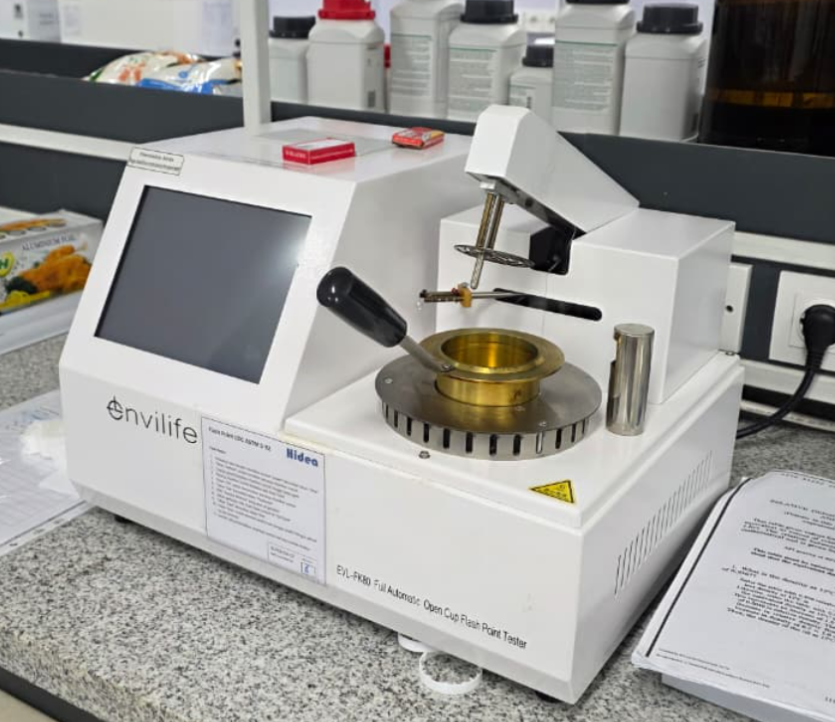
Flash Point Testing is one of the most important tests for fuel characterization, petroleum products, and lubricant. These tests are used to determine the temperature when the steam from a sample can produce flash when exposed to ignition sources in certain testing conditions.
In laboratory testing, method selection becomes a vital part because the characteristic of the sample and specifications can determine the appropriate method. Two common ASTM methods used for Flash Point testing are ASTM D92 - Cleveland Open Cup and ASTM D93 - Pensky- Martens Closed Cup.
For industry, the test results of Flash Point can be used to support quality control, product verification, supplier assessment, analysis of fuel characteristics, as well as technical and safety needs.
Flash Point Testing By ASTM Method
The selection of proper test methods helps ensure lab results match the characteristics of samples and testing needs.
Exclusive ASTM Methods
Testing may refer to appropriate ASTM methods, among other things:
- ASTM D92 - Cleveland Open Cup
- ASTM D93 - Pensky@@
Each method has characteristics and different application spaces so the method selection needs to be adjusted to type samples and test requirements.
Support Quality Control
Flash Point results can be used to monitor interbatch quality consistency and compare product characteristics to specified specifications.
Support Product Verification
Testing can be used as part of the product verification process, including inspection, or check against Certification of Analysis (COA).
Support Safety Evaluation
Flash Point is one of the most important parameters in understanding a material's flammable characteristics and can be part of an evaluation of handling and storage products.
_
One of the most common questions in Flash Point Testing is:
What's the difference between ASTM D92 and ASTM D93, and which method should be used?
The main difference lies in the type of apparatus and characteristic testing it.
| Parameter | ASTM D92 | ASTM D93 |
|---|---|---|
| Apparatus | Cleveland Open Cup | Pensky-Martens Closed Cup |
| Cup type | Open cup | Closed cup |
| Flash Point | ✓ | ✓ |
| Fire Point | ✓ | — |
| Petroleum products | According to method scope | According to method scope |
| Fuel products | According to characteristics and requests | Many are used according to request |
| Biodiesel / FAME | As a request | ✓ according to scope |
| Diesel fuel | As a request | ✓ according to scope |
| Lubricating oil | Matches characteristics | By scope / procedure |
Note: test methods must be determined based on characteristic samples, product specs, the standard required, and the purpose of testing.
ASTM D92 - Cleveland Open Cup
ASTM D92 using Cleveland Open Cup (COC) to determine Flash Point and Fire Point petroleum products in the range of applications set by methods.
On this test, samples heated in a controlled open container. The source of ignition is applied to the surface of the sample at a specific interval until it occurs. flash.
Containable Parameters
- Flash Point
- Fire Point
One of the important characteristics of ASTM D92 is his ability to determine both parameters in one test method.
ASTM D93 - Pensky@@
ASTM D93 using Pensky@@
On the system closed cup, the vapor formed is in a closed space during the testing process before the source of ignition is applied.
Testing Applications
ASTM D93 can be used for various testing needs, including:
- Diesel fuel
- Biodiesel and biodiesel blends
- Fuel oil
- Kerosene
- Turbine fuel
- Petroleum products
- Lubricating a certain oil
The use of methods must remain in the scope and the terms that apply to each of these products.
Flash Point and Fire Point
Both parameters have different functions.
Flash Point
Temperature when steam samples produce flash when exposed to ignition sources on the test state.
Fire Point
Temperatures related to the sample capabilities maintain arson after ignition.
Thus:
ASTM D92
ASTM D93
This difference becomes one of the considerations when determining appropriate test methods.
Analyable Sample Type
Flash Point Testing can be applied to various products of petroleum, fuel, and lubricant according to the method and terms of testing.
| Sample Type | Parameter | Method |
|---|---|---|
| Diesel Fuel | Flash Point | ASTM D93* |
| Biodiesel / FAME | Flash Point | ASTM D93* |
| Fuel Oil | Flash Point | ASTM D93* |
| Kerosene | Flash Point | ASTM D93* |
| Turbine Fuel | Flash Point | ASTM D93* |
| Lubricating Oil | Flash Point | ASTM D92 / D93* |
| Petroleum Products | Flash Point / Fire Point | ASTM D92* |
* The final method is determined based on the characteristic of samples and the valid testing requirements.
Flash Point Respression
Flash Point test results need to be interpreted by considering product specs, testing methods, systemic data, and customer requirements.
For example, if a product shows a much lower Flash Point value than its historic data, it can be the basis for further investigation.
Those changes don't automatically indicate a particular type of contamination, but they can be indicative that it takes additional testing or evaluation of processes and materials.
In ASTM D92, the abnormal flash point on the oil engine could be one of the indications that need to be noticed in the investigation of possible gasoline continuation.
Flash Point Testing benefit for Industrial
For industries, Flash Point testing can provide benefits in some areas:
Quality Control
Monitor product quality consistency and detect changes in interbatch characteristics.
Incoming Inspection
Support fuel checks or petroleum products received from suppliers.
Supplier Verification
Compare lab testing results to the COA or specs provided by the suppliers.
Production Release
Provides technical data as part of the evaluation before the product is used or distributed.
Technical Investigation
Support investigations when there are changes to product characteristics or results that are outside of the historical trend.
Safety Assessment
Giving information about the characteristic of material ignition as part of a safety evaluation.
Power Hidea Test Flash Point Service
PT Hidea Core Provides flash point testing services for a variety of fuel analysis needs, petroleum products, and lubricant.
Testing is done by considering the ASTM method which corresponds to the characteristics of the sample and customer needs.
Testing Method
ASTM D92
Cleveland Open Cup
ASTM D93
Pensky-Martens Closed Cup
Service can be used for needs:
- Quality Control
- Incoming Inspection
- Supplier Verification
- Product Verification
- Fuel Testing
- Lubricant Testing
- Technical Event
- COA Verification
Flash Point Testing Information
For needs Flash Point Testing, election consultation ASTM D92 or ASTM D93, nor fuel testing, petroleum products, and lubricant, please contact:
Custom Service PT Hidea Core
📞 +62 877-6494-5736
📧 labservices@hidea.id
PT Hidea Core
Comprehensive Petroleum & Gas Testing
