


K Accredited Lab for Oil & Gas Industries: ISO 17025 Guide · Global Voices

Why is laboratory Accreditation the Critical Factor of Oil & Gas Industries?
In the oil & gas industry, operational decisions are worth billions of rupees often dependent on lab testing results. Data like gas composition, Gravity API, density, water content, sulfur content, until oil condition monitoring used to determine product quality, calculate transaction value, evaluate asset performance, and ensure compliance to regulation.
Therefore, the question that shouldn't be just "can the lab do tests?" but also "is the lab competent and recognized to do such tests?"
In Indonesia, recognition of laboratory competence was given through Akan accreditation (National Accreditation Committee) by SNI ISO / IEC 17025: 2017, which is an adoption of the ISO / IEC international standard 17025.
What is ISO / IEC 17025?
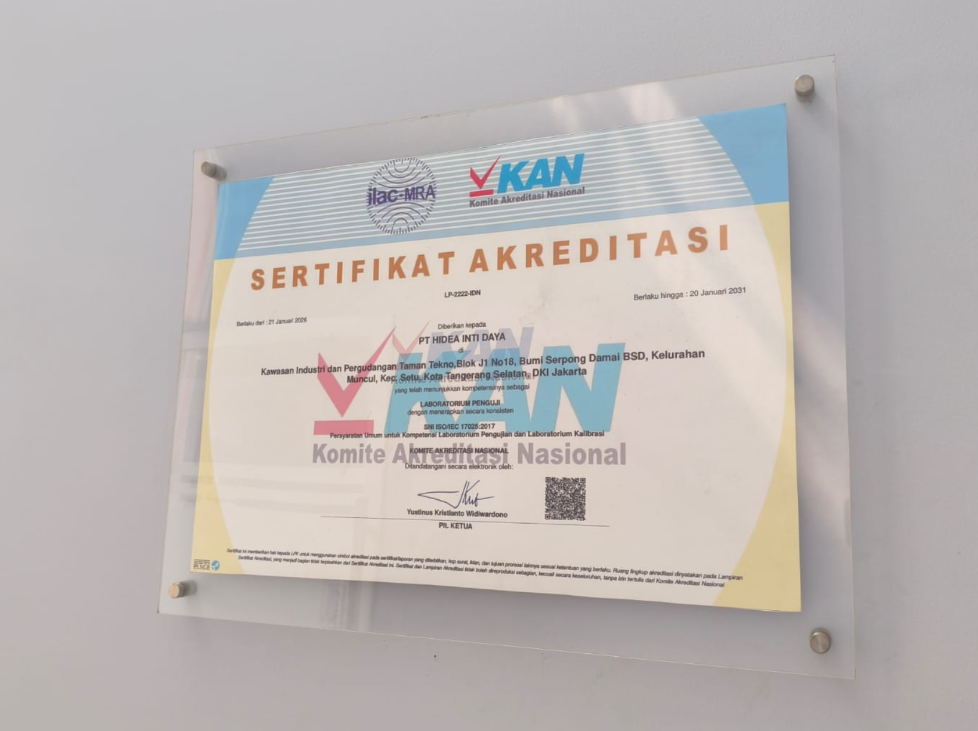
ISO / IEC 17025 is an international standard that determines the terms of competence, inequality, and operational consistency of test labs or calibration. This standard is used globally to ensure that the lab is able to produce valid, reliable data, and can be traced.
Contrary to ISO 9001 that focuses on quality management systems in general, ISO / IEC 17025 minutes into technical laboratory capabilities, including:
- Extension personnel
- Method Validation
- Calibration equipment
- Measure search (traceability)
- Test result quality
- Containment of measurement uncertainty
In other words, ISO 17025 not only ensures the lab has good procedures, but also proves that the results of the exam are reliable.
What's the role in lab activation?
In Indonesia, laboratory accreditation was performed by National Accreditation Committee (Nl). It's a national accreditation agency that gives formal recognition to laboratory competence based on ISO / IEC 17025 SNI.
Accreditation process involves:
- Document review
- Field accessory
- Revaluation of personnel competence
- Witness testing
- Verify quality system
Accreditation is not a certificate given once and for all. The lab has to undertake surveillance and reactivate periodically to make sure the competence stays awake.
General Error selecting Lab
A lot of lab service users only see the Fl logo in the test results report. In fact, the existence of the logo alone isn't enough.
The most common mistake would be to assume that the autoaccredited lab is competent for all kinds of testing.
In fact, ISO / IEC accreditation 17025 is. Scope-specific Or scope-based. A laboratory only recognized its competition for parameters, methods and matrix samples listed in its accredited scope.
For example:
- Accredited labs for density testing are not automatically accredited for sulfur.
- Accredited labs for water testing are not automatically accredited for natural gases.
- Accredited labs for ASTM D1298 are not necessarily accredited for ASTM D4052.
Therefore, understanding the scope of accreditation is as important as checking his accreditation status.
How to Read the Accredited Al Space
Each accredited lab has a scope document which explains in detail the capabilities that have been recognized.
The scope usually says:
Test Parameters
Example:
- Density
- Gravity API
- Sulfur
- Water Content
- Mercury
- Gas Composition
Testing Method
Example:
- ASTM D1298
- ASTM D4052
- ASTM D4294
- GPA 2261
- GPA 2286
Sample Type (Matrix)
Example:
- Crude Oil
- Condenate
- Gas Natural
- LPG
- Glycol
- Produced Water
If the parameters you need are not listed in that scope, then technically those tests are not included in lab accreditation coverage.
Why is the Space Scope Accreditation Very Important for Oil & Gas Industries?
Migas industries have different characteristics than other industries.
Many operational and commercial decisions are based on lab results, such as:
Custody Transfer
Gas composition, density, and the Gravity API are used to determine the transaction value between the seller and the buyer.
Small errors can produce significant value differences.
Quality Control
The tests of sulfur, water content, or glycol purity are used to ensure product specs are met.
Integrity Asset
Parameters like oil condition monitoring, wear metal, and container are used to detect potential equipment failures before downtime.
Regulatory Compliance
Various environmental parameters and safety require technically accountable data.
In the entire application, lab data reliability is a very important factor.
The generally accredited Oil & Gas Parameters
While selecting labs for the migas sector, some common parameters are searched for among others:
Gas Analysis
- Gas Composition Analysis
- Hydrocarbon Composition
- Heating Value
- Specific Gravity Gas
- Nitrogen
- Carbon Dioxide
Usual methods used:
- GPA 2261
- GPA 2286
- ASTM related GC
Petroleum and Kondensat analysis.
- Density
- Relative Density
- Gravity API
- Water Content
- Sulfur Content
- Reid Vapor Pressure
General ASTM method:
- ASTM D1298
- ASTM D4052
- ASTM D5002
- ASTM D4294
Oil Condition Monitor
- Viscosity
- TAN
- TBN
- Water Content
- Wear Metal Analysis
- Particle Count
Glycol Analysis
- Glycol Purity
- Water Content
- pH
- Degradation Product
Accredited Laboratories versus Non-Accredited Laboratories
The biggest difference is not only in certificates, but in the quality of testing.
| Aspek | ISO 17025 Accredited | Miss Accredited |
|---|---|---|
| Method Validation | There | Not necessarily. |
| Search | There | Not necessarily. |
| Projective test | Wajib | Unmandatory |
| Periodic audit | There | Nothing |
| International recognition | Yes | Limited |
| Uncertainty measurements | Control | Not necessarily. |
ISO / IEC 17025 is designed to make sure the lab produces valid results, can compare, and can be traced.
A question better asked before selecting a lab.
Before sending samples, some of the following questions were highly recommended:
1. Is the parameters I need included in the accreditation scope?
2. What aSTM or GPA method was used?
3. Is the test results report published in the accreditation scope?
Four. What is the limit of detection and uncertainty of measurement?
5. Does the lab have any experience on the same sample matrix?
These questions are often more important than just comparing the test price.
Conclusion
Ini Accreditation based on ISO / IEC 17025 is not just an administrative formality. Accreditation is proof that labs have technical competence, quality systems, personnel, methods and tools that produce valid and reliable data.
However, choosing the lab wasn't enough just to look at his accreditaries. Service users should also understand accreditation scope, because competency recognition only applies to parameters and methods listed in the scope of the lab.
For oil & gas industries, this understanding is very important because laboratory results are often the basis of operational, commercial and regulation decisions.
Oil & Gas Test Service Information
PT Hidea Core provides various testing services for oil & gas sectors, including:
- Gas Composition Analysis
- Gravity and Density API
- Water Content
- Oil Condition Monitor
- Glycol Analysis
- Mercury Analysis
- Sulfur Analysis
For technical consulting and testing requirements:
Customer Service PT. Hidea Inti Daya
📞 +62 877-6494-5736
